
Why a model first
AI video models deliver beautiful images and unreliable control. The same creature looks different in every generation, the camera does as it pleases. For a teaser in which a dragon appears several times, that is a problem: the viewer should recognize the same creature.
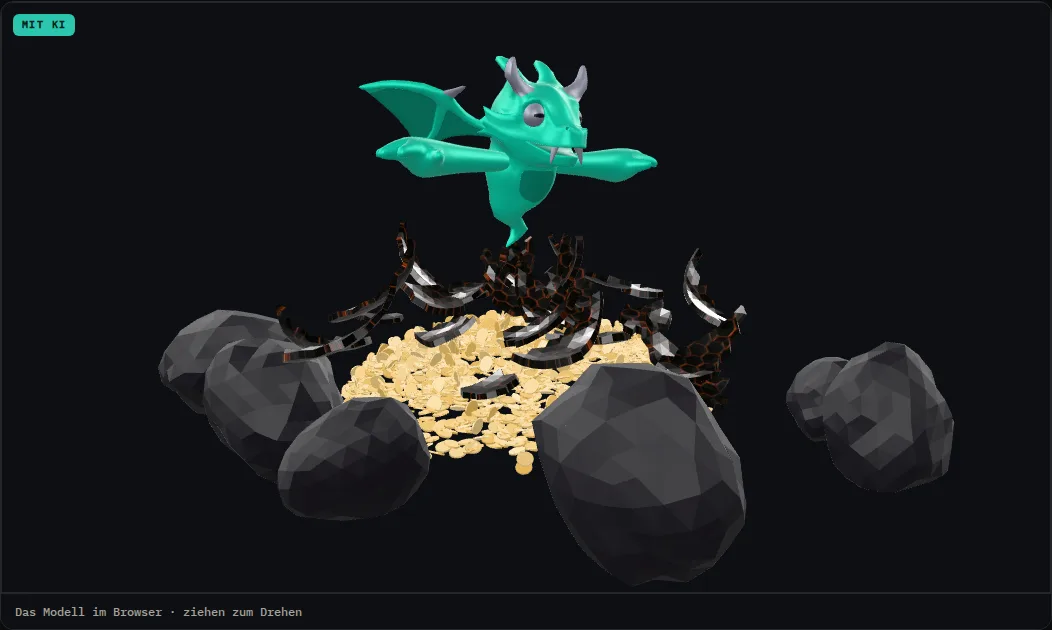
Hence the detour through Blender. The assistant built a model of the dragon egg that fixes the shape: proportions, surface, pivot. On this model we could plan what the film should later do. Which framing works? Is the silhouette enough? How much motion can the scene carry? On a fixed model these are decisions; on generated video they would be coin flips.
Only then came the filmic material. Motion and posing emerged from the fixed model, and the video models gave the result its photorealistic look: Seedance for motion and scales, Veo for framing and light. Three steps, side by side in three strips on the website: the rotatable model, the animation from it, the finished film frame.
What sits in the browser
- Model
- drachenei.glb, 5.0 MB, configured with 28-degree lens and pivot
- iPhone
- USDZ export, 1.7 MB, augmented reality via Quick Look
- Films
- three loops: model turntable, dragon loop, final framing
- Loading
- viewer and videos only on approach, poster first
The viewer notices none of this. He sees an egg that rotates on its own, grabs it and keeps turning. That a Blender model sits underneath, that two video models carried the look and that the files together weigh 15 megabytes is no information to him. To us it is the difference between a one-off gag and a recognizable character.
Why this transfers
The dragon is the clearest example, but the pattern holds everywhere: AI models deliver raw material in seconds. What is missing is reliability. Putting a fixed model first, whether a 3D object, a style reference or a character sheet, takes the space away from chance. That is exactly what orchestration means: not using one tool, but deciding the order in which the tools feed each other.
Costs before you commit
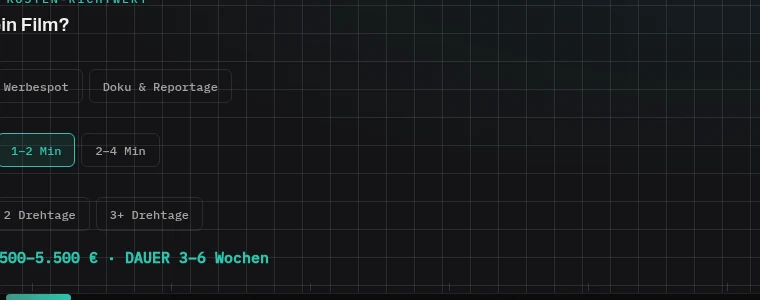
You see a prototype and its cost first, before you commission anything.
Free first call AI Orchestration: how a teaser is made at QLTY
 What a website costs: ours is a quarter