


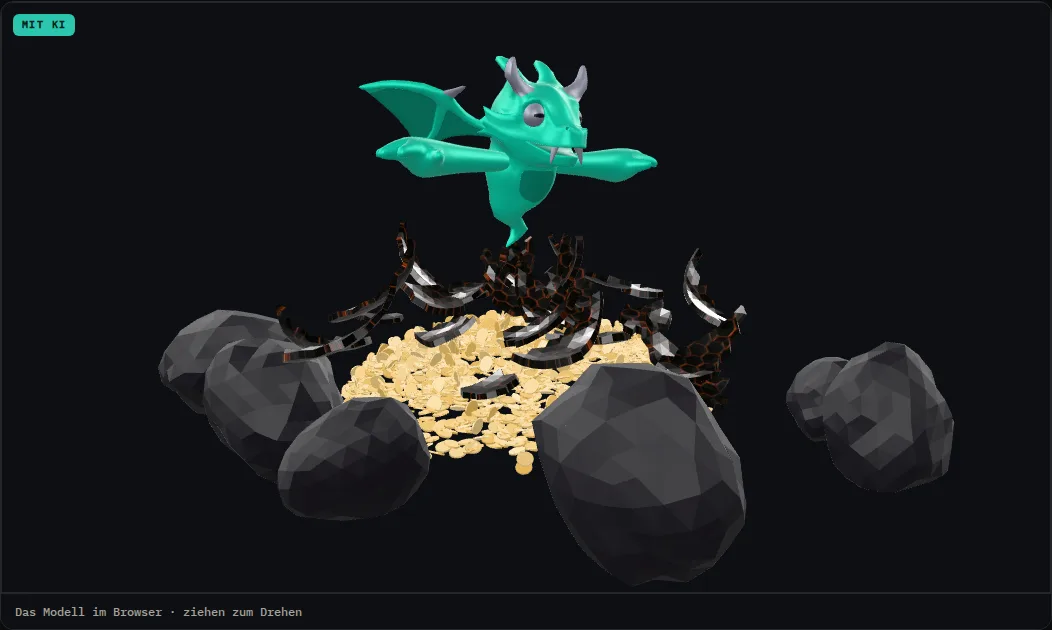
Looking through the first AI draft, much of it feels familiar. You ask yourself whether visitors can tell what makes your company special. By now there are numbers on this. We use such tools ourselves.
What is vibe coding?
Vibe coding means building software by describing it instead of writing code. AI researcher AI researcher Andrej Karpathy coined the term in February 2025 and explicitly meant small, short-lived projects. Since then the practice has spread to larger work. A quarter of the startups in the winter 2025 class of Y Combinator, the best-known startup accelerator in the US, had code that was 95 percent AI-generated. Most people using these platforms are not developers. Among the most widespread builders are Lovable and Bolt: you describe the site, the platform delivers the draft. Lovable reports that around four out of five users work without technical training. At Bolt, 63 percent of surveyed business customers had never written code themselves.
In the same conversation, a Y Combinator partner issued a warning: without taste and practice, nobody can tell whether the model produces something good or something bad.
How similar are the results?
In April 2026, Adrian Krebs ran an automated check over 1,590 landing pages. The pages come from Show HN, the section of the tech forum Hacker News where developers present their projects. It tested 16 patterns, from the Inter typeface to purple gradients to icon tiles above headlines. Result: 22 percent of the pages showed four or more patterns, another 32 percent two to three. Krebs rated the pages as solid craftsmanship, but unimaginative in design.
A second count from November 18, 2026 examined 450 pages that their builders present publicly on Lovable and Bolt. 81.3 percent carried at least one AI-typical pattern. The most common were texts with color gradients, at 33.8 percent, followed by the same typeface everywhere, at 30.9 percent.
A third analysis compared 72 pages built with AI site builders against 20 pages of established software companies on November 21, 2026. The AI group averaged 46 out of 100 points, the comparison group 72. The clearest difference between the groups was design quality. 61 of the 72 AI pages shared the same page structure.
- carry four or more AI patterns
- 22 % of 1,590 Show HN pages
- carry at least one pattern
- 81.3 % of 450 Lovable and Bolt pages
- points against software companies
- 46 : 72 AI-built pages : established providers
- build with 95 % AI code
- 25 % of Y Combinator startups 2025
Why does this happen?
Anthropic describes the mechanism itself. Without guidance, almost every requested landing page lands on the same typeface, purple gradients on white, minimal animation. The vendor calls the reason distributional convergence. The model always picks the most probable solution, and that is the average. Their own text also states the consequence: this aesthetic weakens a brand's identity and makes AI interfaces instantly recognizable and easy to copy.
A look at the tool's history shows why bans alone do not help. Anthropic's design guidelines first banned the typeface Inter and the color purple, successfully. By September 2026, the same guide listed new default patterns to avoid, including cream, serif typefaces, and terracotta. Terracotta is the company's own brand color. Ban a look and you get the next default.
Do visitors notice?
The evidence here is recent and clear. A survey with 485 participants from August to October 2025 shows: when marketing content is recognized as AI-generated, trust, authenticity, and credibility drop measurably. A systematic review of 35 studies from 2020 to 2026 finds the same pattern. Labeling content as AI activates reservations and costs trust-related impact.
Recognizing standard AI design will likely become an everyday skill. What looks like a slip today will be read tomorrow as a sign of low care. The price of recognizability keeps rising.
What helps?
The counts also show the counterweight. Where people decide, pages diverge. The average emerges from absent decisions, not from the technology. Concretely:
The tools speed up the work considerably. The decisions call for craft experience.
How we build
At QLTY media we use generative tools for structure and implementation. The decisions on typography, color, motion, and imagery are made by people before the first prompt, fixed as design tokens. Every project starts with a fixed-price prototype. Only when it stands does full production follow.
Frequently asked questions
Who is vibe coding for?
Prototypes, internal tools, weekend projects. Karpathy, who coined the term, meant exactly that frame.
Are AI-generated websites worse than handmade ones?
Not necessarily worse technically. The counts consistently show working baseline quality. The difference lies in recognizability and trust.
What does the difference cost?
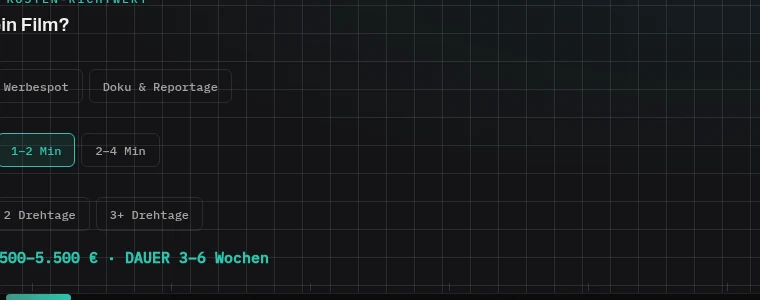
A vibe-coded result appears in minutes and costs almost nothing. Crafted decisions take time. We publish our pricing logic in the blog and a calculator with a range from 1,500 to 30,000 euros, depending on scope.
Sources
- Adrian Krebs: Scoring Show HN submissions for AI design patterns, April 2026
- Slop report: Do websites built with AI tools look AI-made, November 18, 2026
- Landing Page Gods: Why Do AI-Generated Websites All Look the Same, November 21, 2026
- Anthropic: Improving frontend design through Skills, 2025 to 2026
- TechCrunch: A quarter of startups in YC's current cohort have codebases that are almost entirely AI-generated, March 6, 2025
- MRUNI Education: One step forward, two steps back: AI generated content vs. perceived trust, authenticity and credibility, field phase August to October 2025
- American Impact Review: Consumer Trust in AI-Generated Marketing Content, 35 studies 2020 to 2026
 Why marketers should watch the porn industry for tech trends
 Why big agency groups struggle with creative work
 Does AI Kill Creativity? What Two Studies Show