





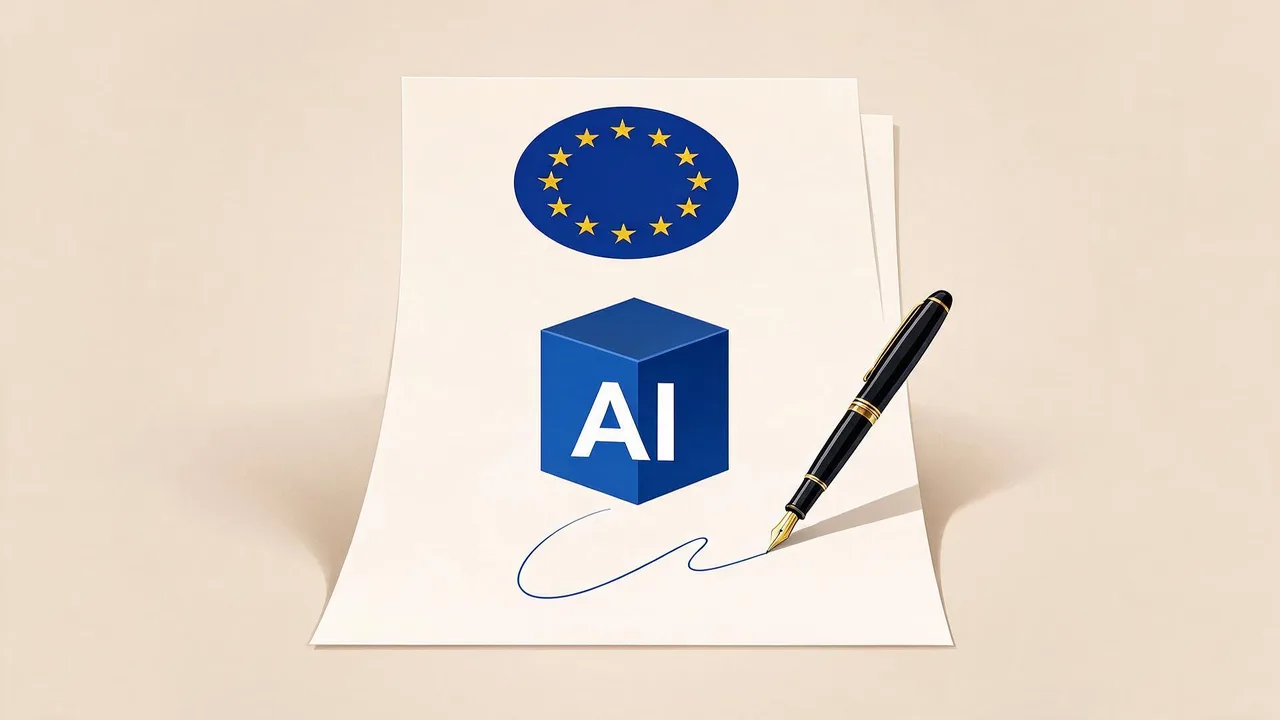
What is the Code of Practice?
The Code is a voluntary rulebook for AI labelling. Six independent experts led its development, with the participation of more than 180 stakeholders. The European Commission published it on 10 June 2026. The Commission and the AI Board have assessed it as appropriate. It is addressed to providers and deployers of generative AI systems. Providers are developers of systems that generate audio, image, video or text content. Deployers are companies that use such systems professionally.
The Code relates to the transparency obligations in Article 50(2), (4) and (5) of the AI Act. These obligations have applied since 2 August 2026 to the covered providers and deployers respectively, regardless of a signature. Those who sign the Code and implement its relevant measures can thereby demonstrate fulfilment of the covered obligations. Those who do not sign provide proof by other means. The authorities then assess on a case-by-case basis whether their own measures are appropriate.
- Rulebook
- Code of Practice on transparency of AI-generated content, published 10 June 2026, assessed as appropriate by the Commission and the AI Board. Two sections: one for providers, one for deployers.
- Signatories
- Around 190 organisations by the end of July 2026 according to the Commission, including Google, OpenAI, Meta and Microsoft. About half are small and young companies.
- Section figures
- The signatory list is updated continuously. It currently shows 95 signatures for Section 1 and 192 for Section 2 (as of 2 November 2026). Some organisations have signed both sections.
- Transitional deadline
- Systems placed on the market before 2 August 2026 must implement the machine-readable marking under Article 50(2) only by 2 December 2026 (Regulation (EU) 2026/1744).
- Cost
- The signature and the EU icons are free of charge. The Code can simplify proof of compliance.
What does the Code regulate in concrete terms?
Section 1 is addressed to providers: generated content must be marked in machine-readable form, for example via metadata or watermarks. This includes detection methods with which such markings can be verified. Section 2 is addressed to deployers: deepfakes and AI-generated or AI-edited texts on matters of public interest must be clearly disclosed.
The EU provides free icons for this purpose, in four colour and transparency variants. A Commission user test showed that icons with additional text are better understood than icons alone. The icons are an offer, not a requirement. Anyone publishing a video with an AI voice can combine the icon with a note such as “Voice AI-generated”. Whether an AI voice counts as a deepfake depends on the individual case.
Exceptions remain in place: for evidently artistic, satirical or fictional works, appropriate disclosure is still required. It must not impair the presentation and enjoyment of the work. AI texts that have been human-reviewed and for which a person takes editorial responsibility do not fall under the obligation for texts.
Who can sign?
Providers and deployers of generative AI systems covered by Article 50(2) or (4) can sign. The Code remains voluntary; the obligations behind it do not. Those who do not sign demonstrate fulfilment of the obligations by other means.
The list of signatories is public and growing. At the end of July 2026, the Commission reported around 190 organisations. The current list shows 95 signatures for the provider section and 192 for the deployer section. Alongside the tech corporations, Getty Images, Lufthansa and Lenovo have also signed.
What happens without a signature?
Those who do not sign lose no rights, but receive less legal certainty. The responsible market surveillance authority assesses on a case-by-case basis whether their own measures are appropriate. Violations of Article 50 are subject to fines. The ceiling is 15 million euros or 3 per cent of worldwide turnover in the preceding financial year, whichever is higher. For small and medium-sized enterprises and start-ups, the lower of the two ceilings applies. These are maximum limits, not automatic fines.
For systems placed on the market before 2 August 2026, a transitional period applies: the machine-readable marking under Article 50(2) does not have to be implemented until 2 December 2026. The legal basis is Article 111(4) as amended by Regulation (EU) 2026/1744. The remaining labelling obligations have applied to these systems since August.
What does this mean for agencies?
For agencies and brands, the Code is a blueprint. Section 2 is relevant when published content falls under the disclosure obligations: when people, objects or events are depicted in a way that makes them appear real although they are AI-generated, or when AI texts on matters of public interest are published without human review. AI video or AI music alone does not trigger the obligation.
We at QLTY label AI-generated components in client projects voluntarily. The Code describes a pattern for this: the EU icons, the recommendation of additional text and the separation of provider and deployer obligations. Advertising can also contain deepfake elements and is then subject to disclosure. Whether a case falls under the obligation remains a case-by-case assessment.
Frequently asked questions about the Code of Practice
Is the Code of Practice mandatory?
No. The Code is voluntary. The transparency obligations under Article 50 of the AI Act have applied since 2 August 2026 to the covered providers and deployers respectively. The Code can simplify proof of fulfilment.
Does advertising with AI content have to be labelled?
Advertising is subject to disclosure when it has deepfake character: when people, objects or events are depicted in a way that makes them appear real although they are AI-generated. AI texts on matters of public interest without human review are also covered. AI-generated advertising without these features is not automatically subject to the obligation. Chatbots always need a notice.
What does the signature cost?
Nothing. The signature and the EU icons are free of charge. Signatories implement the Code's measures. The Code simplifies their proof towards the authorities.
What applies to systems placed on the market before 2 August 2026?
A transitional period applies to them: the machine-readable marking under Article 50(2) does not have to be implemented until 2 December 2026. The remaining obligations have applied since August. The deadline is set out in Regulation (EU) 2026/1744.
Where can I find the Code and the icons?
On the European Commission's website in the Digital Strategy section. The icons are available as SVG and PNG, free to use. The list of signatories is updated there on an ongoing basis.
Sources: European Commission, press release on the Code of Practice, 10 June 2026, European Commission, report on the signatories, 31 July 2026, list updated continuously (both accessed 2 November 2026), European Commission, icons for labelling AI-generated content, Regulation (EU) 2026/1744, EUR-Lex.
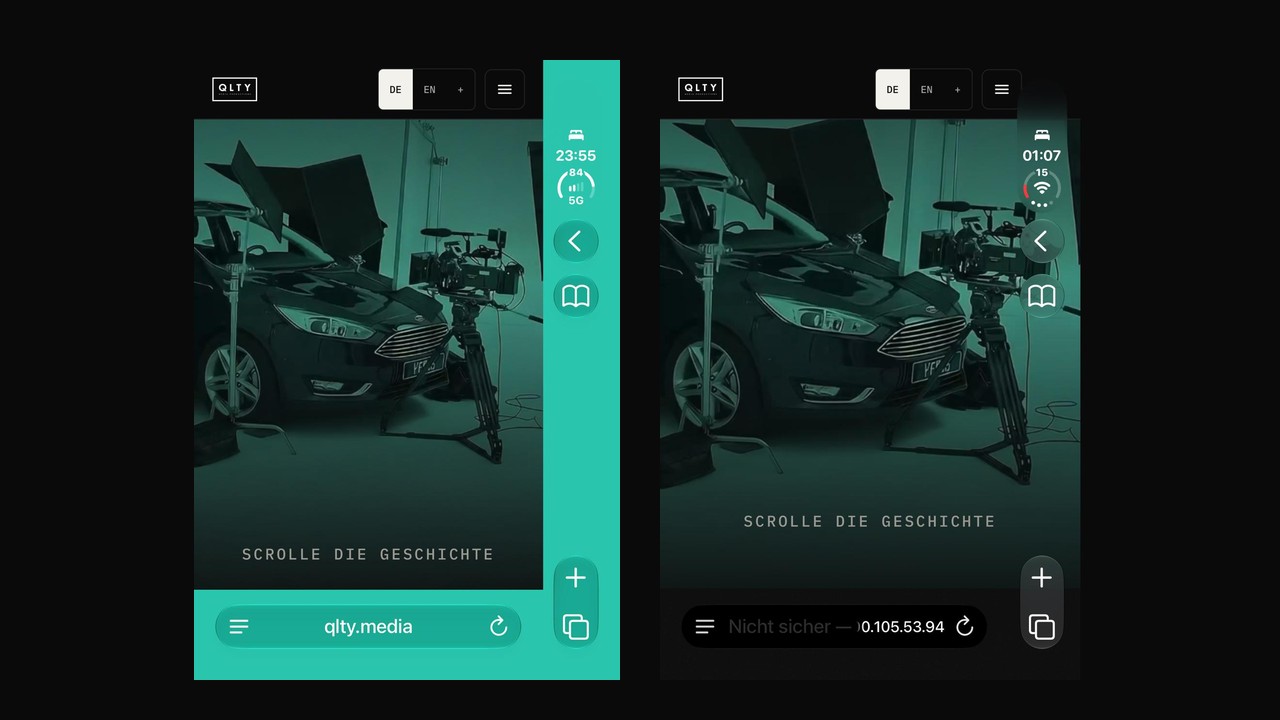 iPhone Duo: The outer display that made us rethink our website
 iPhone Duo: Why 9:16 alone is no longer enough