



What has changed?
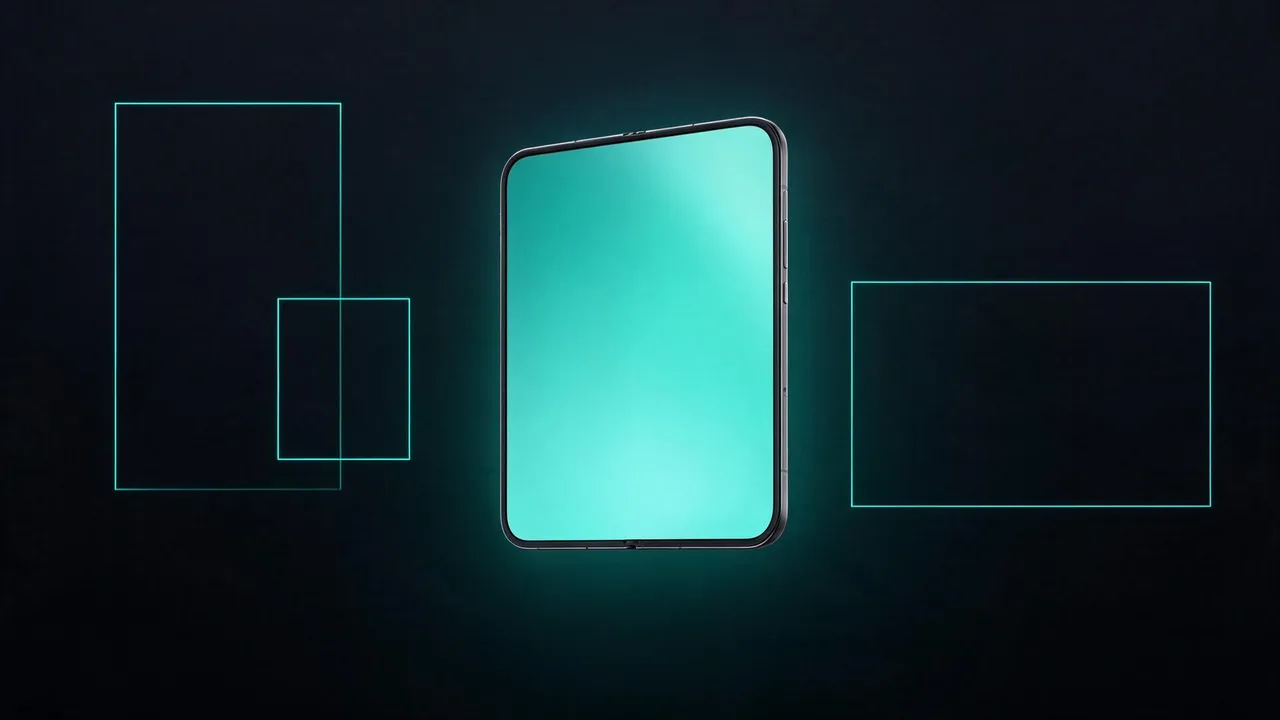
The iPhone Duo has been available since 23 October 2026, Apple's first foldable iPhone. Opened, the inner display measures 7.6 inches diagonally; the separate outer display measures 5.4 inches. Apple describes the aspect ratios of both displays as matching, so content scales proportionally when opening and closing. In pixels, according to the tech specs: 1878 x 2670 inner and 1398 x 2034 outer. The inner display therefore has a long-side-to-short-side ratio of about 1.42 to 1 and is less elongated than a 9:16 display. In Germany the Duo starts at 2,299 euros.
Previous iPhone displays are roughly 9 to 19.5, clearly narrower than tall. The Duo adds a display closer to the shape of a classic television than to a strip. For video this means: a 9:16 video no longer fills the new display as fully as earlier models.
Which format fills the Duo display?
For this model calculation we assume 1878 pixels wide and 2670 pixels high, the opened inner display in portrait. The calculation assumes full display without cropping and without app interface. Apple notes that the actually visible area is smaller.
| Video format | Example pixels | Width | Height | Area |
|---|---|---|---|---|
| 9:16 portrait | 1080 x 1920 | 80 percent | 100 percent | 80 percent |
| 1:1 square | 1080 x 1080 | 100 percent | 70 percent | 70 percent |
| 4:5 portrait | 1080 x 1350 | 100 percent | 88 percent | 88 percent |
| 16:9 landscape | 1920 x 1080 | 100 percent | 40 percent | 40 percent |
Values rounded, own calculation. Each format is scaled so the entire video fits undistorted; remaining areas stay outside the video image.
In portrait, 4:5 uses the largest area of the four formats at about 88 percent, ahead of 9:16 at 80 percent. In this orientation 16:9 is smallest at 40 percent.
Rotate the device and the picture reverses. At 2670 pixels wide and 1878 pixels high, 16:9 uses about 80 percent of the area, more than any of the other three formats. 9:16 then drops to about 40 percent. Device orientation decides which format uses the most area.
Should I produce in 16:9 now?
That cannot be derived from the display alone. It depends on the placements a campaign has booked. Rotated, 16:9 uses about 80 percent of the area, the largest of all four formats. In portrait it is only about 40 percent.
16:9 remains the format for placements whose player or layout is built for landscape: classic YouTube videos, television, video areas on websites, presentations. Whether a campaign needs it is in the media plan, not in the display data.
What does this mean for social video?
Format choice should start with the placements: before production, list the booked surfaces and assign the required aspect ratio to each. If a campaign needs several ratios, a production based on jointly planned source material pays off, with variants cut from it.
Plan the frame so the message survives in every required crop. Key subjects, logo and subtitles belong in areas that stay visible in every variant. The app interface can cover edge areas, so each variant should be checked in the preview of the intended placement.
AI tools can generate additional variants or image areas. The results must be checked for consistent subjects, motion and product details.
What does the switch cost?
The additional effort depends on how much framing, edit and text overlays differ between variants. If the required formats are already part of your production process, the switch is mostly planning.
The briefing should cover, per variant: aspect ratio, resolution, duration, subtitles, text positions, file specs and acceptance criteria. Quotes should itemise costs for additional edits, graphics and revision rounds.
How we assess this
Duo pre-orders on 16 October sold out within minutes, and Apple called demand extraordinary in a statement to the Financial Times. According to reports, new orders will not ship until late January 2027. These signs point to fast adoption of the device.
Our assessment: if the Duo spreads like this, more people will watch video on a near-square display and rotate the device for it. That raises the odds that 16:9 shares in social feeds become natural again. We are therefore planning multi-format productions as standard from now on, with 16:9 as an equal format alongside 9:16. This is an assessment based on pre-order figures, not a confirmed forecast: how platforms render their feeds is their decision.
Frequently asked questions about video formats
Does the iPhone Duo bring back landscape format?
Rotated, 16:9 uses about 80 percent of the Duo's area, more than any of the other three formats. In portrait it is about 40 percent. Which format matters most for a campaign is decided by the booked placements, not the display.
What is 9:16 still for?
For vertical video offerings like Reels, TikTok and YouTube Shorts, 9:16 remains a relevant production format. Plan it in when the intended placements require or recommend it.
What is a multi-format production?
A production based on jointly planned source material from which several formats are cut. The prerequisites are sufficient frame coverage and resolution for each variant. An existing 9:16 export cannot be extended to landscape without loss.
When should we switch?
Check at the next campaign planning which formats the intended placements actually need. Existing 9:16 content does not need replacing because of the Duo. In a free consultation we clarify which variants your placements require.
Sources: Apple Newsroom (iPhone Duo announcement, 9 September 2026) · Apple Tech Specs (display resolutions, accessed 23 October 2026) · Area shares: own calculation from the pixel dimensions, portrait and landscape, each rounded · Gagadget (pre-order sell-out, shipping times, October 2026)
 AI in Marketing: The Current Figures
 AI Labelling Obligations: What Has Applied Since 2 August 2026