
You rarely recognize AI images by wrong hands. You recognize them by the light. Every diffusion model learns from millions of images that photographers selected and retouched. The result: models light scenes the way a studio would. And that is exactly what gives them away. This article sums up what we learned about credible AI images in a local production project.
Why does beautiful light give AI away?
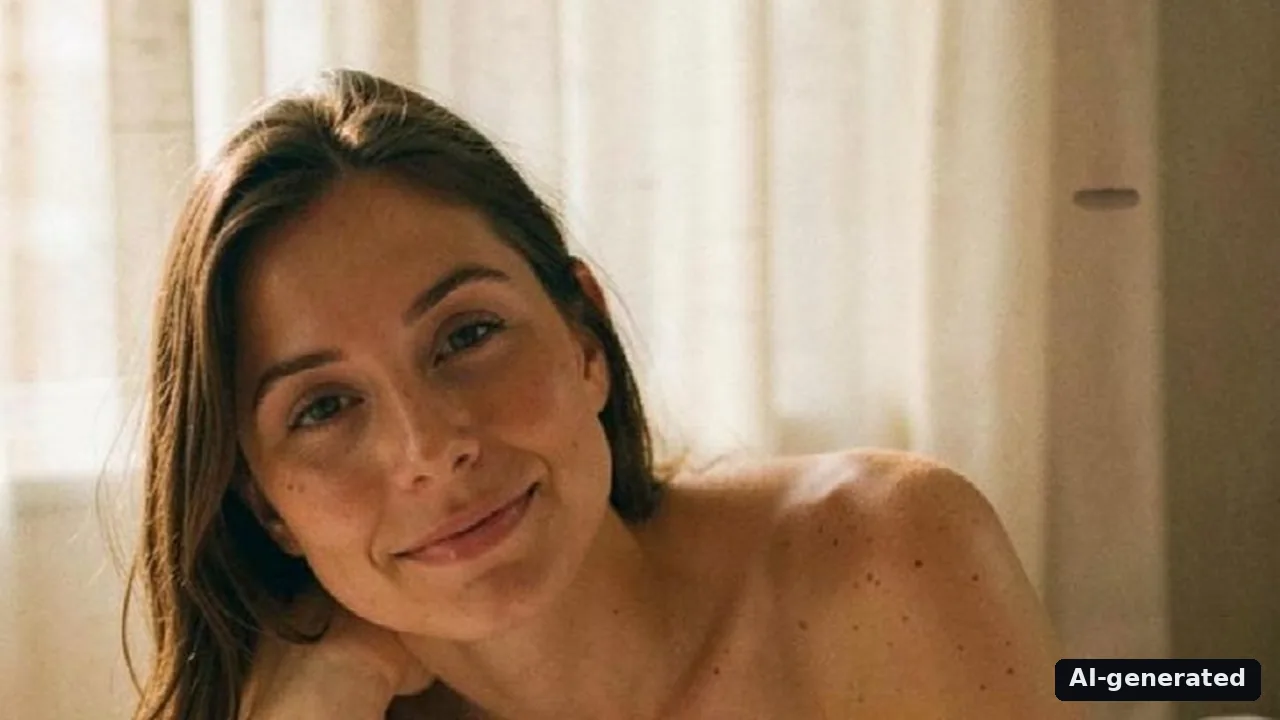
The finding from our project sounds paradox at first: professional photography vocabulary in the prompt produces retouching aesthetics. Whoever describes equipment and film stock that professionals use gets smooth studio results. The model has learned that such descriptions belong to selected, edited images.
Second tell: the frontal gaze. A model smiling straight into the camera produces a mask. A three quarter profile with subtle facial asymmetry instantly feels more human.
The reason lies in training: diffusion models learn from the best images available online. An amateur photo with a crooked horizon and flash falloff is far rarer in the training data than a professionally lit subject.
Which shooting conditions create authenticity?
The turning point in the project: switching the prompt from image attributes to shooting conditions. The difference between the two approaches was the biggest single leap of the whole series.
- Attributes
- natural skin texture, perfect body, studio quality
- Shooting conditions
- window light, consumer camera, snapshot, not staged
- Effect
- attributes produce retouching, conditions produce authenticity
A typical prompt for credible results describes the situation of the shot: flat diffuse window light, an ordinary digital camera, a documentary snapshot, not staged. Add the light recipe: one single weak light source, hard shadows, a slightly wrong white balance with a yellow cast.
And every beautiful light type goes into the negative: softbox, studio lighting, rim light, cinematic lighting, HDR, balanced exposure. Whoever wants beauty describes it. Whoever wants authenticity forbids it.
How much prompt does one property need?
The second lesson concerns prompt discipline. Diffusion models scale adjectives, they do not weigh them. Describing one property repeatedly and strongly does not yield stronger authenticity. It yields exaggeration.
We learned this on anatomy. Trying to create skin texture through stacked attributes produced spots that looked like skin disease. The fix was a single mild formulation. The rule that emerged: one property, one mild formulation. Overdescription produces exaggeration.
One property, one mild formulation. Diffusion models scale adjectives, they do not weigh them.
This holds for all photorealism work: whoever wants natural looking bodies, faces or products describes each feature exactly once and restrained. The rest emerges from the shooting conditions.
Why does one model alone not suffice?
The project required photorealistic adult content, produced locally, without cloud. While searching for the right pipeline it became clear: a model that is hardcore capable, photorealistic and anatomically correct at the same time does not exist locally. We did not simply fail to find it. After systematic search it is simply not there.
The solution was a two stage chain: a specialized SDXL checkpoint renders the scene. An img2img pass with Qwen-Image 2.1 rebuilds the surface. The decisive parameter is denoise strength. At 0.45 the anatomy of the source stays intact and only the skin is recomputed. Above that you inherit the distortions of the source. At 1.0 the body gets reinvented, which means broken.
For the softcore variant FLUX.2 small 4B alone was enough: one step, about 15 seconds per image, with the shooting conditions in the prompt. Both recipes apply to the adult genre, the principles behind them to every subject.
A note on pipeline planning: before you produce erotic content with AI, check the legal limits. In Germany section 184 StGB applies, plus an FSK rating per channel for distribution. Commercial use is governed by model licenses. We clarified the license basis before every series, before generation, not after.
Why local instead of cloud?
Generating adult content through cloud APIs has two problems. First: most providers block the genre. Second: sensitive content leaves your own control. Both argued for local production.
The effort is manageable. ComfyUI on a powerful machine, all models from Hugging Face, no API. Before first use every model was checked three times: hash comparison against the Hugging Face API, payload scan for pickle markers, check of embedded URLs. The scan produces false positives you need to know: weight data randomly matches base64 patterns, tokenizer vocabularies contain words like subprocess as ordinary tokens. A scan is only worth something if you can explain the exceptions.
For companies this is the real lesson: sensitive image content can be produced fully locally. Brand assets, prototypes, unreleased products. Nothing leaves the machine.
What about post processing?
Sprinkling film grain and JPEG artifacts on top afterwards changes the surface, not the credibility. Skin texture must emerge in the render. Grain added later only conceals.
Which questions remain open?
Do viewers really notice the difference?
Yes. In our review rounds perfectly lit images stood out immediately. After the light recipe the candidates passed the review. The effect was the single biggest jump of the series.
Does the light recipe work for every subject?
The principles carry beyond the genre: one light source, hard shadows, wrong white balance. For product and lifestyle subjects a milder variant usually suffices, a cheap phone flash plus an untidy background.
Is one powerful model enough on its own?
No. A model for every requirement does not exist locally. The two stage chain with manual selection is the local state of the art. Higher demands call for combining models.
The key facts in numbers
- Softcore recipe
- FLUX.2 small 4B, 4 steps, 15 seconds per image
- Hardcore chain
- SDXL checkpoint plus Qwen-Image 2.1 img2img
- Denoise formula
- 0.45 keeps anatomy, rebuilds only the surface
- Production
- local, ComfyUI, no cloud
Free initial consultation
You want photorealistic AI images for your brand, produced locally? Discuss your project with us. We show which pipeline your requirements need.
 What does an AI video cost? How the price takes shape
 France Plans an Internet Tax: 5.5 Cents per Gigabyte