
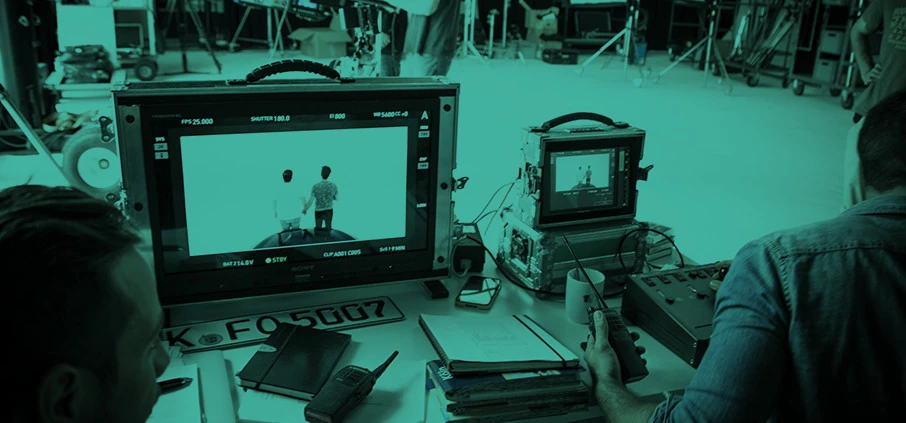
The shoot is over, everything looked good on the monitor, and on the computer the footage shows defects: the audio is clipping, the image stutters because the camera overheated, the focus sat on the background instead of the face. The honest answer used to be: reshoot. The older problem got the same answer, VHS tapes, wedding DVDs and corporate videos on tape with noise, interference and flat colors. Much of that no longer applies. Restoration models reconstruct detail that is no longer present in the image, and audio tools separate the voice from the noise. Four methods have changed, and one limit remains.
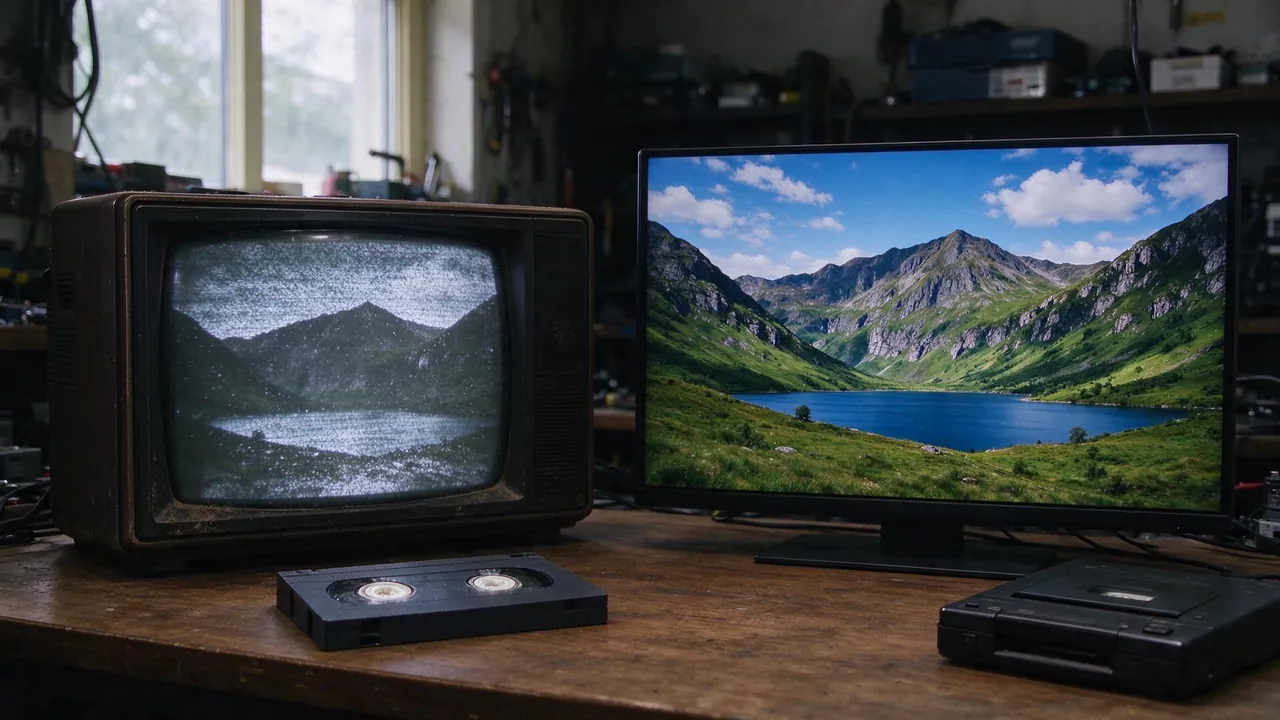
Summary: AI video restoration can now do what used to be impossible: reconstruct lost detail in faces and textures frame by frame, replace missing frames, clean heavily compressed and noisy recordings without sacrificing texture, and separate speech from heavy background noise. Dedicated models exist for VHS, DV and interlaced material. The AI generates detail that looks credible. It cannot prove that it matches the original. The typical defects are called clipping, dropped frames, out of focus. Both are worth saving: the failed shoot and the archive material. Before anything is restored, the source material is assessed.
What to do when a shoot has gone wrong?
Three defects occur frequently.
Audio: clipping, noise, low levels. Clipping is the most common case: the audio distorts because the recording was captured too loud. Noise and levels that sit too low come on top. Restoration separates the voice from the noise and smooths distortion as long as the voice is still recognizable.
Image: dropped frames. Dropped frames are missing single frames, usually because the camera or the recording drive overheated. The image stutters. Diffusion models reconstruct the missing in-between frames. We have used this ourselves: in one restoration, ten frames per second were missing in places; the reconstruction ran on a rented H100, and the result plays smoothly.
Image: out of focus. Missed focus, in professional terms out of focus: the focus sat on the background instead of the face. Slight misfocus can be sharpened. With heavy blur the limit from the previous section applies: plausible detail is created, not an original. Some faces come back, some stay soft. Until the sample is tested, nobody knows which group your material falls into.
A new shoot day costs scheduling, crew and travel. An assessment of the existing material initially costs nothing but time.
What was previously impossible?
Before, a sharpening filter could emphasize existing edges. What compression and age had destroyed was lost. Diffusion models work differently: they rebuild faces, textures and lettering frame by frame and even replace entire missing frames. The vendor Topaz describes this stage as generative enhancement for archived and heavily damaged material.
The second advance is called denoising. Classical noise filters removed the texture along with the noise; the result was a smooth, plastic-looking image. Current models separate the two: sensor noise, film grain and compression artifacts disappear, fine texture stays. The denoising models from Topaz name exactly this separation as their goal.
The same applies to audio. EQ and compressor always removed parts of the voice along with the noise. AI separation lifts spoken language out of heavy background noise. The voice isolator from ElevenLabs describes exactly this case: clean speech from heavily disturbed recordings.
And the old formats: interlacing, the interlaced field method of old television technology, leaves comb artifacts. Halos sit on hard contrasts, VHS transfers come in SD. Dedicated models exist for all of it, for deinterlacing as for cleanup. Topaz calls its VHS model Starlight Mini and describes it for VHS, early film transfers and low-resolution SD material. AI audio tools are also a standard part of restoration today.
How does the AI reconstruct lost detail?
Diffusion models generate image content that fits the surroundings. They have learned from millions of examples how skin, fabric, hair and lettering look. Where a piece is missing, they fill it with plausible structure. New detail is created, not just contrast on existing edges.
Reconstructed detail is plausible: it fits the image, but it does not document what was actually there. For memory, publication and archive material that is enough. For forensic evidentiary value, for example in court, it is not.
Which sources are worth restoring now?
VHS, VHS-C and miniDV, DVD transfers, old SD material, heavily compressed web videos from the two-thousands, phone footage from dark rooms, audio tracks with ground noise. And current material from a failed shoot, from the 4K camera to the phone. For upscaling, for scaling organic textures, models work up to a factor of four. The condition of the source decides: as long as recognizable structure remains in the image, there is something to reconstruct.
Where are the limits?
First: the source has to offer something. If the material runs as a colorless mush, the model lacks a starting point.
Second: reconstruction smooths. On heavily degraded material a model can even out faces where character used to be. Topaz describes this for its VHS model as a slight softness that suits archive material. Whether it suits is decided by the job, not by the model.
Third: automatisms run through. Single frames with dropouts or tracking noise survive a stage and end up in the result. A restoration therefore ends with a visual check, not with the export button.
How does a restoration at QLTY work?
You send the material. We assess it and tell you which improvements are possible. The first assessment is free. After that you receive a fixed price and a schedule for the possible improvements. Only then is the material restored. The assessment decides whether the effort is worth it, and the quote prevents billing by gut feeling.
AI moves the limit: material that was unusable yesterday is worth an assessment today.
- Assessment · initial evaluation of the material
- free
- Missing frames reconstructed · own production
- 10 per second
- Upscaling · organic textures, documented for Topaz models
- up to factor 4
- QLTY media
- Agency from Cologne, since 2015
QLTY media is an agency from Cologne and restores old video material as part of post-production. The restoration runs as its own service with assessment, fixed price and schedule.
Get your material assessed: Send us a sample of your recording. The first assessment is free. We tell you what the source can deliver and name fixed price and schedule. No sales pressure.
Frequently asked questions about video restoration
Can a failed shoot be saved?
Usually yes. Clipping and dropped frames are the most rewarding cases. Heavy misfocus is the limit: plausible detail is created, not an original. Send a sample and we tell you which of these applies to your material.
Can AI restore any old video?
No. The models need recognizable structure in the image. If the material is just a colorless mush, the starting point is missing. That is why every restoration begins with an assessment of the material.
Is reconstructed detail real?
The models generate structure that fits the image. They do not document whether it matches the original. For memory and publication that is enough. For forensic purposes a reconstruction is not evidence.
Can missing frames be replaced?
Yes. Diffusion models reconstruct missing in-between frames. In one of our own productions, ten frames per second were missing in places; the reconstruction ran on rented H100 hardware. With a sample of your material we see in a test run whether the stutter disappears.
What does a restoration cost?
The first assessment is free. After that you receive a fixed price and a schedule for the possible improvements. No unclear items.
Is VHS still worth it?
Yes, if the tape plays. Dedicated models handle VHS transfers in SD, with a slight softness that suits archive material. For a family archive that is usually enough. For a broadcast rarely.
Passende Leistungen: AI video agency Cologne: ads without a shoot day · Film & advertising Cologne: from image film to commercial
 What does a corporate film cost? The market in four price classes
 Meta Pauses Its Ad Terms: Who Is Liable for AI Ads?
What would you like to realise?
Write to us. We usually reply the same working day.
QLTY IS ALL GmbH · Barbarossaplatz 7 · 50674 Köln